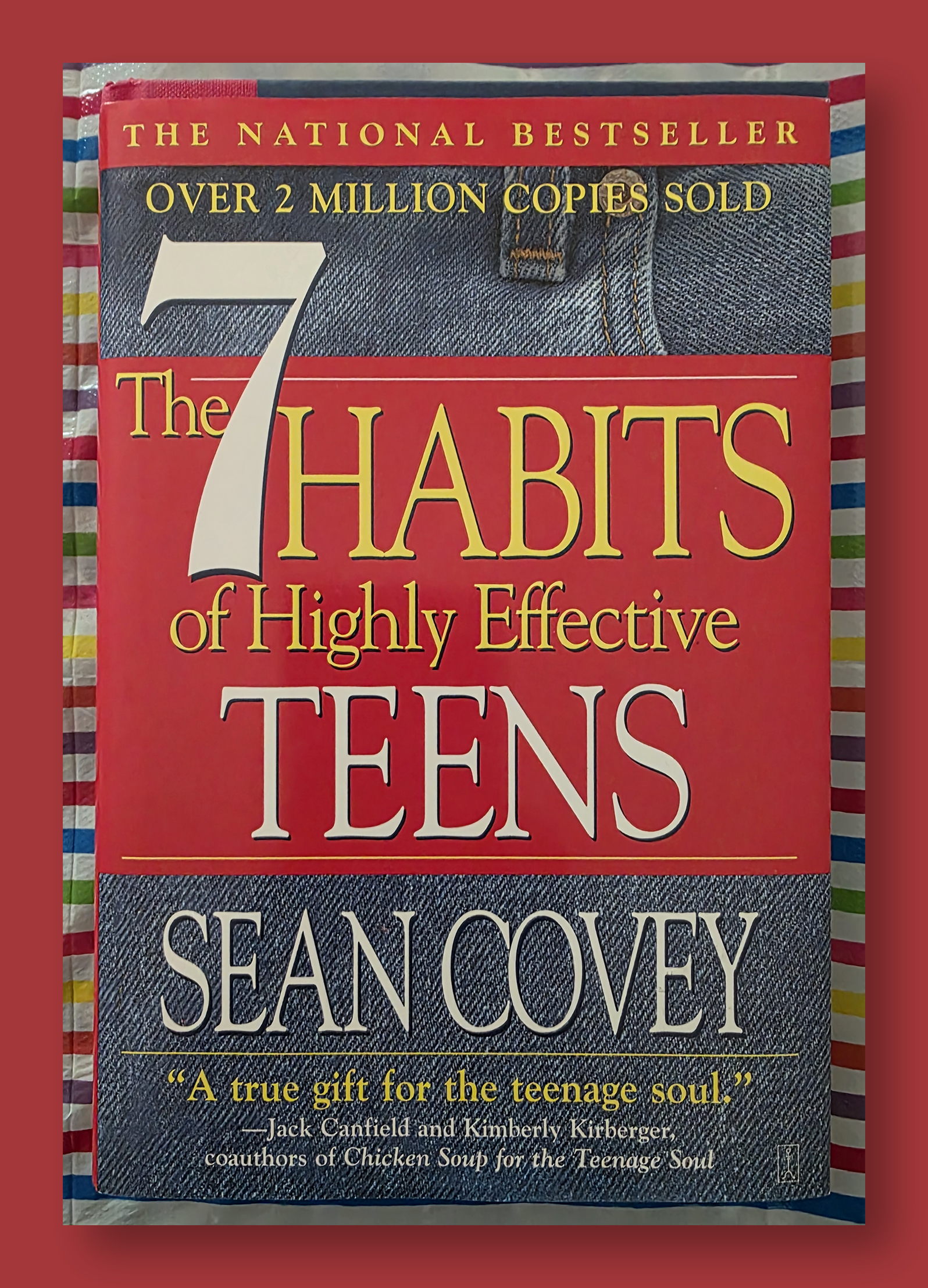
Have you or your parental figure been trying to find the right pick for tips on living the teen life? If you have not found any satisfying choices that meet your standards, then Sean Covey’s guide, “The 7 Habits of Highly Effective Teens,” is the perfect choice for you.
First off, the book explains each topic in a simple, easily understood way. Most books start flying off the handle while spitballing tons of new vocabulary terms that the reader might not even comprehend. Additionally, the topics themselves are very practical and build off of each other instead of being very unrelated. For example, in order to accomplish the third habit, prioritizing the most important things, you have to have goals and tasks to accomplish. Subsequently, some teens do not need any more help with academics or finance but simply with finding their voice, their path, or even communication skills.
Another thing this book excels at is providing clear and concise examples for the reader to follow. There are tons of ways that someone can get stuck on what course of action to take and how to apply the habits discussed. However, by utilizing illustrative examples, the author successfully paints a perfect picture for readers to follow and be able to use the suggestions to their advantage. Not only do they derive from Covey’s personal life, but they also come from real teenagers. This evokes a heightened sense of relatability, and it makes the reader feel understood. These examples allow the reader to connect with the author and trust the author’s writing. Countless teenagers desire help to improve themselves every day, and this is one step for motivating them to listen.
Third of all, this incredible book not only assists with uplifting yourself, but also uplifts other people. Covey demonstrates how to deal with people precisely and be emotionally smart when someone feels a certain way towards you or about something personal. For example, I learned that one of the best ways to comfort someone is to “mirror” what they say. When someone says they are upset because they did not get the grade they wanted, you can rephrase their feelings into different words and validate their thoughts. It not only affirms that they are able to express their feelings safely with you but also shows them that you are listening. Several teenagers focus so much on academics or their school life that they do not find enough time to socialize or have proper relationships. They might not have enough experience to handle comforting someone else, which is exactly one of the concepts this book teaches: empathy. Additionally, teamwork is built into one of the sections. Although working in teams may sound like a simple concept, this is not always the case. Some people always prefer to go solo, but sometimes, it can be good to have experience in working with other people to prepare yourself for getting a job. These fundamental skills are perfect for dealing with problems in the real world and permit teens to expand their knowledge of communicating with other people.
Last but not least, this book does an outstanding job at teaching you how to manage your time and yourself. The author does not put things lightly, but he is not too harsh either. Instead, his words convey the right message in the best way possible. He establishes that it is better to be proactive than reactive, which means that you take responsibility for your own life and for what you do. Reactive people blame others for something that goes wrong and do not do anything to try and get around this new obstacle. However, they will complain all they want about it and play the “victim.” The author demonstrates that being proactive is an essential habit to obtain, as it allows you to become better and take responsibility and action more often. You get humbled due to the consequences of, for example, procrastinating an assignment that you had 2 weeks to do. Hence, his inspirational wording and motivational steps demonstrate that it is possible to manage all the tasks high school throws at you to make it up to college.
To sum it up, this book contains extremely valuable, beneficial, and accommodating tips for teenagers around the world to follow. The trick is to slowly and steadily incorporate these habits into your daily lives. If there is still one you do not completely understand or do not know where to start, then after every section, “baby tips” are there to support and assist you. The cartoons drawn throughout the book are also quite engaging for those who learn best visually, although the author already does a fantastic job at helping the reader visualize what they can do with these habits. Henceforth, while this book does not offer everything to know about finance or how to get into the medical school your parents are nagging you about, it will still help you in the long run with enhancing your future, refining your time management skills, polishing your communication skills, dealing with drug or alcohol addiction, and even eating healthier. The possibilities are endless with this book. This monumental foundation for teenagers growing up makes them feel heard and seen for once, instead of being told to complain less and that lives back in the old days were way harder. Instead of focusing on the past, Covey’s masterpiece propels teenagers to think about their lives right now and what kind of person they want to be in the future as an adult. Therefore, I rate this book a solid five out of five. If you want to make better decisions and improve your future, this book is a compact start to do so. Well? What are you waiting for? The choice is yours.